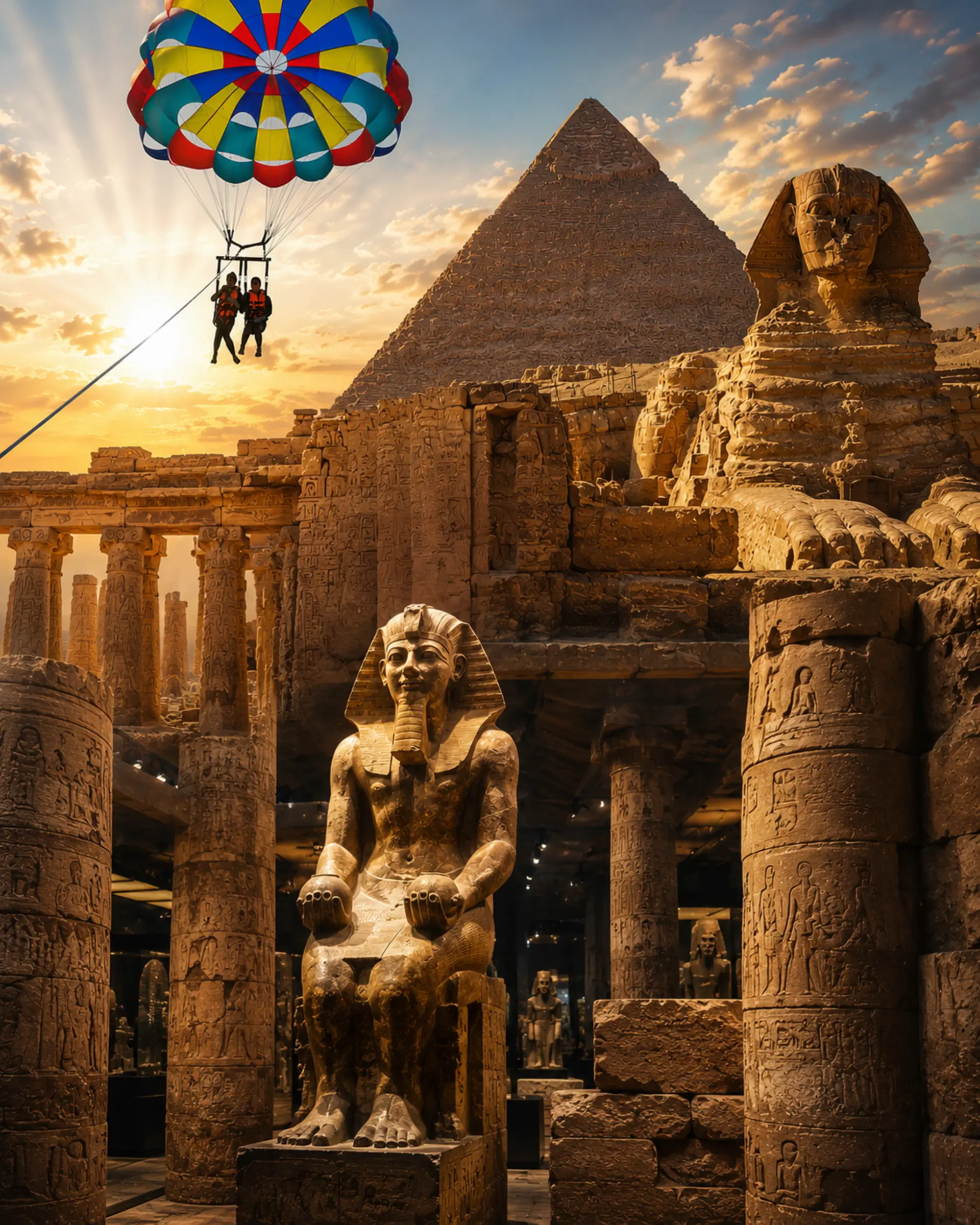
When planning an Upper Egypt itinerary, the question of Luxor vs Aswan inevitably arises. Both cities offer remarkable access to ancient Egyptian civilisation, yet they provide distinctly different experiences. Luxor boasts an unparalleled concentration of monumental temples and tombs from the New Kingdom period, making it essential for serious history enthusiasts. Aswan, by contrast, offers fewer temples but compensates with breathtaking Nile scenery, distinctive island settings, and rich Nubian culture.
Luxor vs Aswan: The Quick Answer
For travellers prioritising ancient temples and pharaonic monuments, Luxor is the clear winner. The city contains the greatest concentration of significant archaeological sites in Egypt, including the vast Karnak Temple complex, Luxor Temple, and the West Bank's impressive collection of mortuary temples and royal tombs. If your primary goal is to explore ancient Egyptian civilisation in depth, Luxor deserves more of your time.
However, Aswan offers a different kind of appeal. Its temples are fewer in number but often more dramatically situated—Philae Temple on an island surrounded by the Nile, Abu Simbel's colossal façade carved into a mountainside. Aswan provides a more relaxed atmosphere, stunning desert-and-river landscapes, and authentic Nubian cultural experiences that you won't find in Luxor.
| Best For | Winner |
| Temple quantity and variety | Luxor |
| Scenic beauty and atmosphere | Aswan |
| First-time visitors to Egypt | Luxor |
| Relaxed, peaceful stay | Aswan |
| Nubian culture | Aswan |
| Photography | Both (different styles) |
| Recommended minimum stay | 2-3 days each |
Why Visit Luxor for Ancient Temples?
Luxor, known in ancient times as Thebes, served as Egypt's capital during the New Kingdom (approximately 1550-1077 BC). This golden age of pharaonic power left an extraordinary legacy of monumental architecture. The city's temples and tombs represent some of the finest achievements of ancient Egyptian civilisation, making Luxor essential for anyone interested in archaeology and history.
Karnak Temple Complex
Karnak stands as one of the world's largest religious complexes and represents over 2,000 years of construction and modification. The site's most famous feature, the Great Hypostyle Hall, contains 134 massive columns arranged in 16 rows, creating an awe-inspiring forest of stone. Walking through this hall, with sunlight filtering through clerestory windows, provides a visceral sense of ancient Egyptian religious power.
The complex includes multiple temples, chapels, pylons and obelisks dedicated primarily to the god Amun, though deities Mut and Khonsu also have significant presences. First-time visitors typically need 2-3 hours to explore the main areas properly. The sheer scale of Karnak makes it difficult to comprehend without context, which is why many travellers benefit from a guided tour.
Luxor Temple
Located in the heart of modern Luxor on the East Bank, Luxor Temple offers a more intimate experience than Karnak while remaining architecturally impressive. Built primarily by Amenhotep III and Ramesses II, the temple connected to Karnak via the Avenue of Sphinxes—a processional route now partially restored.
The temple's central location means you can visit at different times of day, including evening when lighting creates a magical atmosphere. Unlike Karnak's sprawling complexity, Luxor Temple's layout is more straightforward, making it easier to appreciate the architectural details and reliefs depicting religious festivals and royal power.
Temple of Hatshepsut
On Luxor's West Bank, the mortuary temple of Queen Hatshepsut presents a striking contrast to the traditional temple architecture found elsewhere. Built into a dramatic limestone cliff face at Deir el-Bahari, the temple features three terraced levels connected by ramps, creating a harmonious blend of human construction and natural landscape.
Hatshepsut, one of Egypt's most successful female pharaohs, commissioned this temple to legitimise her rule and honour the god Amun-Ra. The colonnaded terraces display well-preserved reliefs depicting her famous trading expedition to Punt and her divine birth. The temple's setting against towering cliffs makes it one of Luxor's most photogenic sites.
Medinet Habu and the Ramesseum
While Karnak and Hatshepsut's temple attract the largest crowds, the West Bank offers other significant temples worth visiting. Medinet Habu, the mortuary temple of Ramesses III, features impressive pylons, well-preserved reliefs showing military campaigns, and a more relaxed visiting experience due to fewer tourists.
The Ramesseum, Ramesses II's mortuary temple, though partially ruined, demonstrates the ambitious scale of New Kingdom temple construction. The fallen statue of Ramesses that inspired Shelley's "Ozymandias" remains a poignant reminder of time's passage. These sites offer quieter alternatives for travellers who want to explore beyond the main attractions.
Note: The Valley of the Kings, while not a temple, is located on Luxor's West Bank and contains the royal tombs including Tutankhamun's. It deserves separate consideration in your itinerary planning.
Why Visit Aswan for Ancient Temples?
Aswan occupies Egypt's southern frontier, where the Nile flows between granite rocks and desert sands. The city's slower pace, distinctive landscape, and Nubian cultural heritage create a different atmosphere from Luxor's archaeological intensity. Aswan's temples, though fewer, benefit from dramatic settings that enhance their impact.
Philae Temple
Philae Temple's island location makes it one of Egypt's most romantically situated ancient monuments. Dedicated to the goddess Isis, the temple complex was painstakingly relocated from Philae Island to Agilkia Island during the 1960s and 70s to save it from flooding caused by the Aswan High Dam. This UNESCO-led rescue operation moved over 40,000 structures stone by stone.
Reaching Philae requires a short boat ride across the Nile, adding to the sense of adventure. Once on the island, visitors explore elegant colonnades, kiosks and temples surrounded by water on all sides. The combination of Graeco-Roman architecture, Nile views and island tranquillity creates a memorable experience distinct from mainland temples.
Abu Simbel from Aswan
Though not located in Aswan itself, Abu Simbel represents one of Egypt's most spectacular archaeological sites and is typically visited as a day trip from Aswan. The temples of Ramesses II and Nefertari were carved directly into a mountainside approximately 280 kilometres south of Aswan.
Abu Simbel's colossal façade features four seated statues of Ramesses II, each over 20 metres tall. Like Philae, these temples were saved from Lake Nasser's rising waters through an extraordinary UNESCO rescue campaign in the 1960s, cutting the monuments into blocks and reassembling them 65 metres higher.
Visiting Abu Simbel requires an early start due to the distance—most tours depart around 4:00 AM. Despite the early hour and long journey, most travellers consider it worthwhile. The scale and artistry of the temples, combined with their dramatic desert setting, create an unforgettable experience.
Kalabsha Temple
For travellers with additional time in Aswan, Kalabsha Temple offers a quieter alternative. This Roman-period temple, dedicated to the Nubian god Mandulis, was also relocated during the High Dam rescue operations. Located south of Aswan near the dam, it receives far fewer visitors than Philae or Abu Simbel.
Kalabsha provides insight into the cultural fusion of Egyptian, Nubian and Roman traditions during the early centuries AD. The temple's relative obscurity means you can explore at your own pace without crowds, making it ideal for travellers who appreciate archaeology without the tourist pressure.
Note: Kom Ombo Temple, dedicated to the double deities Sobek and Horus, lies between Luxor and Aswan and is commonly visited during Nile cruises. It's not located in Aswan city but makes an excellent stop when travelling between the two destinations.
Luxor vs Aswan Temples: Direct Comparison
| Category | Luxor | Aswan | Best Choice |
| Number of major temples | Karnak, Luxor Temple, Hatshepsut, Medinet Habu, Ramesseum | Philae, Abu Simbel (excursion), Kalabsha | Luxor - greater variety |
| Monumental scale | Karnak is one of world's largest religious complexes | Abu Simbel's colossal statues; Philae more intimate | Luxor for overall scale; Aswan for Abu Simbel's impact |
| Architectural variety | Architectural variety | Graeco-Roman period temples, island architecture | Luxor - more diverse periods |
| Nile scenery | Agricultural landscape, East/West Bank division | Granite rocks, islands, desert backdrop | Aswan - more dramatic |
| Ease of sightseeing | Sites spread across East and West Banks | Philae requires boat; Abu Simbel is distant | |
| Cultural atmosphere | Tourist-focused, bustling markets | Relaxed, strong Nubian presence | Aswan - more authentic |
| Access to other attractions | Valley of the Kings, Valley of the Queens | Nubian villages, botanical gardens, High Dam | Both offer complementary sites |
| Photography | Monumental architecture, reliefs | Island settings, desert landscapes, Nile views | Both - different styles |
Which City Has More Impressive Temples?
When comparing Luxor vs Aswan temples, the answer depends on how you define "impressive." If you measure by sheer quantity, architectural variety and historical significance, Luxor wins decisively. The concentration of world-class monuments in one location is unmatched—Karnak alone could occupy a full day, while the West Bank's collection of mortuary temples and tombs represents the pinnacle of New Kingdom achievement.
However, if "impressive" encompasses setting, atmosphere and visual drama, Aswan's temples offer unique advantages. Philae's island location creates a romantic, almost mystical atmosphere that mainland temples cannot match. Abu Simbel, though requiring a significant journey from Aswan, ranks among Egypt's most awe-inspiring sites—its colossal scale and mountain setting create an emotional impact that rivals any Luxor monument.
For travellers considering Luxor vs Aswan temples, the practical reality is that both destinations offer essential experiences. Luxor provides comprehensive understanding of ancient Egyptian religion and royal power, while Aswan demonstrates how temples integrated with landscape and how different cultures (Egyptian, Nubian, Graeco-Roman) influenced religious architecture.
Luxor or Aswan for First-Time Visitors?
For first-time visitors to Egypt, Luxor should be your priority. The city contains the iconic monuments that define ancient Egyptian civilisation—Karnak's hypostyle hall, the Valley of the Kings, Hatshepsut's temple. These sites appear in textbooks, documentaries and travel guides for good reason: they represent Egyptian archaeology at its most spectacular.
However, different traveller types may prefer different destinations:
Choose Luxor if you:
- Are visiting Egypt for the first time
- Prioritise ancient history and archaeology
- Want to see the maximum number of significant monuments
- Don't mind crowds and tourist infrastructure
- Have limited time and must choose one destination
Choose Aswan if you:
- Prefer relaxed atmospheres over intensive sightseeing
- Value scenic beauty and photography opportunities
- Are interested in Nubian culture and contemporary Egyptian life
- Have already visited Luxor or prefer fewer crowds
- Enjoy boat trips and water-based experiences
Best for specific traveller types:
- History enthusiasts: Luxor (unquestionably)
- Couples seeking romance: Aswan (Philae at sunset, Nile views)
- Families with children: Depends on ages—Luxor for older children interested in history; Aswan for younger children who'll enjoy boat trips
- Photographers: Both offer excellent opportunities—Luxor for architectural detail, Aswan for landscape and atmosphere
- Travellers with limited mobility: Aswan (though both have challenges; Philae requires boats, Luxor West Bank involves distances)
- Solo travellers: Both are safe and welcoming; Luxor has more tourist infrastructure
an You Visit Luxor and Aswan on the Same Trip?
Absolutely—and for most travellers with sufficient time, visiting both cities is highly recommended. Rather than choosing between Luxor and Aswan, combining them provides a comprehensive Upper Egypt experience that neither destination alone can offer.
Travel options between Luxor and Aswan:
1. Nile Cruise (Most Popular)
The classic way to travel between Luxor and Aswan combines transport, accommodation and sightseeing. Cruises typically take 3-4 nights, stopping at Edfu and Kom Ombo temples en route. This option eliminates packing/unpacking, provides comfortable accommodation, and includes guided tours. However, you'll have less flexibility and time in each location compared to independent travel.
2. Private Transfer or Domestic Flight
Private drivers can make the journey in approximately 3-4 hours, allowing you to stop at sites like Dendera or Abydos if desired. Domestic flights take about 1 hour but require airport transfers and security procedures. Both options are faster than trains but more expensive.
3. Organised Multi-Day Tour
Many operators offer guided tours combining both cities with transport, hotels and guides included. This removes planning stress and ensures you see major highlights efficiently.
Why visit both?
Choosing between Luxor and Aswan forces you to miss either the greatest concentration of pharaonic monuments (Luxor) or the distinctive Nubian culture and scenic beauty (Aswan). When time allows, experiencing both provides:
Complete understanding of Upper Egypt's archaeological wealth
Contrast between intensive archaeology and relaxed atmosphere
Exposure to different aspects of Egyptian culture
Better value for long-distance travel to southern Egypt
Ready to Explore Upper Egypt's Ancient Wonders?


__thumb.webp)
_lg.webp)

_lg.webp)