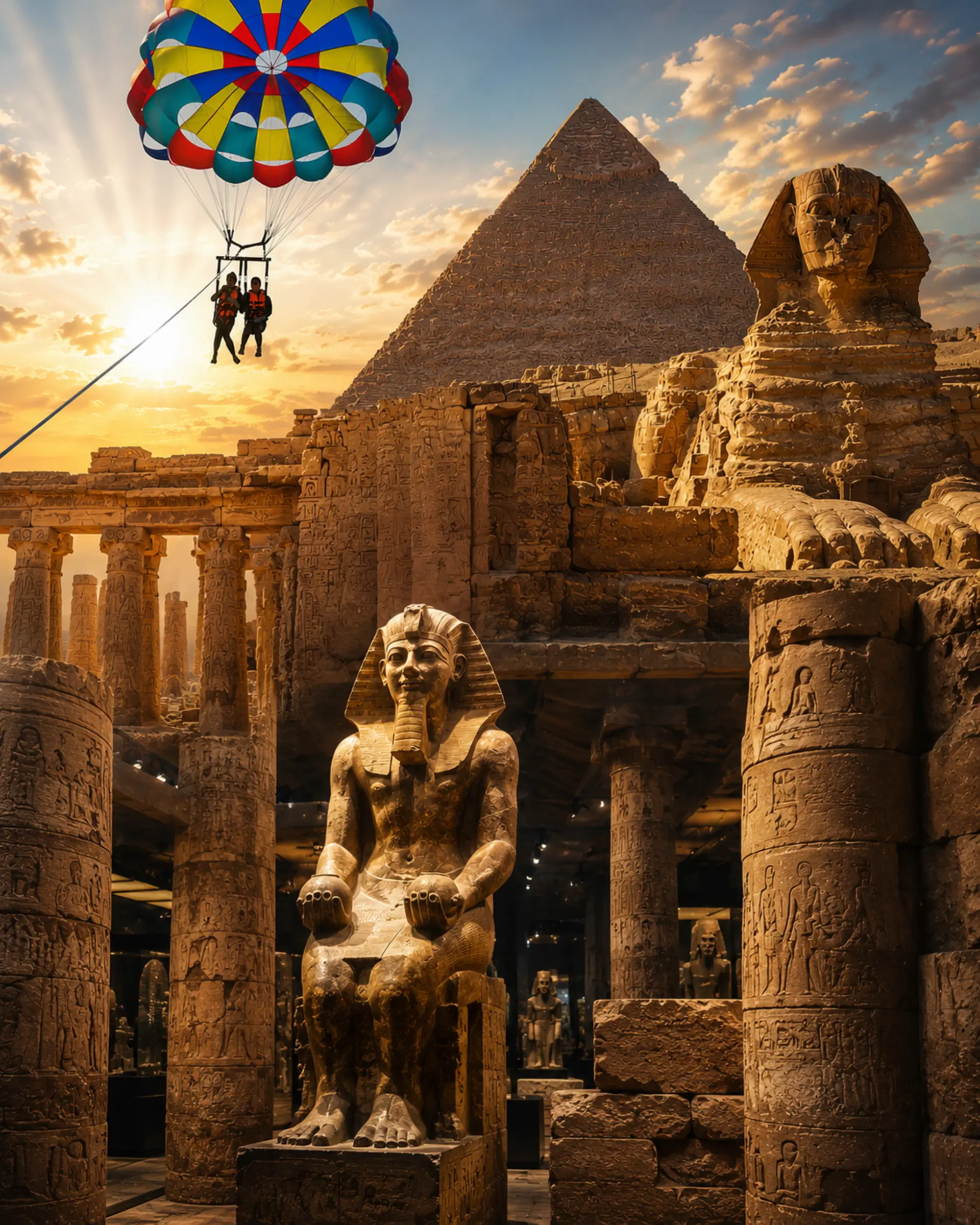
Why the Egyptian Museum in Cairo Is an Absolute Must-Visit
From the very first step through the museum’s grand entrance, it becomes clear why the Egyptian Museum in Cairo is unlike any other place in the world. Beyond iconic masterpieces such as the golden mask of Tutankhamun, it is the quieter, more human objects that leave the deepest impression — a worn child’s sandal made of papyrus, the charred remains of a 3,000-year-old loaf of bread, or tool marks still visible on an unfinished sarcophagus. These artifacts tell stories not of royal glory, but of everyday life in ancient Egypt.
Unlike modern museums with clinical displays, the Egyptian Museum preserves the atmosphere of discovery. Display cases stand closely together, almost as if the objects had just emerged from ancient tombs. In some halls, simple ostraca — clay shards bearing notes from workers — rest beside monumental statues they once helped create. This unfiltered proximity transforms the visit into a silent dialogue with the people behind the artifacts.
What lingers is the feeling of having encountered a lost world rather than simply viewing exhibits. The aged surfaces of the objects, the faint scent of dust, and the subdued lighting are not staged effects — they are witnesses to a living history that still breathes within these walls.
Highlights of the Egyptian Museum in Cairo
Among more than 120,000 artifacts, several treasures stand out not only for their beauty, but for the stories etched into every detail:
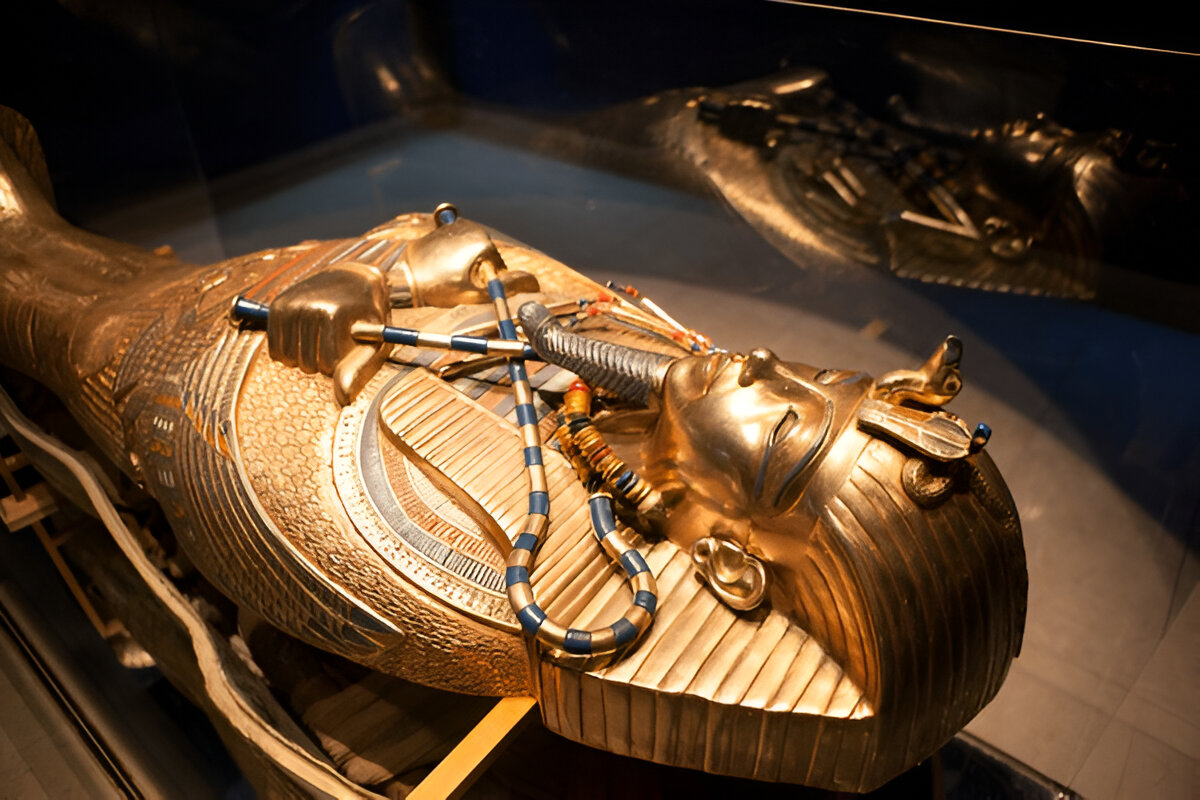
Tutankhamun’s Death Mask
Crafted from over 11 kilograms of pure gold, the mask still bears traces of ancient repairs and subtle alterations that reveal its complex history.
The Royal Burial Treasures
Thousands of objects accompany the young king into the afterlife, including ceremonial staffs, miniature cedar-wood boats, and original linen wrappings still marked with traces of embalming resin.
Colossal Statues of Amenhotep III
Once towering over 18 meters high, these statues reveal symbolic details — such as deliberately damaged toes — representing the transition into the afterlife.
The Royal Mummy Collection
Here, history becomes deeply personal: henna-tinted hair, visible dental conditions, and even preserved fingerprints of ancient priests remain visible today.
These details matter because they show ancient Egypt as it truly was — imperfect, human, and alive. Research continues to this day, with new discoveries still emerging from the museum’s vast collection.
Hidden Treasures: Discovering the Lesser-Known Exhibits
Beyond the famous highlights, the museum shelters intimate glimpses into ancient lives:
- A worker’s complaint about delayed wages written on clay
- A school exercise carved in stone by a young apprentice
- A love letter from a soldier to his wife, still marked by tear stains
Colorful scenes of daily life appear on papyri, toys, cosmetic palettes, and unfinished artworks — frozen moments that never reached completion due to sudden death or changing circumstances.
Many of these objects have only been fully studied in recent decades, and their original presentation remains carefully preserved, offering rare authenticity.
Cultural Identity and Living Heritage
For Egyptians, the museum is far more than a collection of relics. It is a mirror of national identity. Schoolchildren recognize familiar shapes still used in their villages today. Craftsmen see techniques in ancient statues that survive in modern workshops. Scholars continue to decode texts that reveal knowledge still applied along the Nile.
The museum also serves as a living forum, where historians, artists, and poets gather to discuss how ancient symbols, patterns, and traditions continue to shape modern Egyptian culture.
Conclusion
The Egyptian Museum in Cairo is not simply a place to admire ancient masterpieces. It is a living archive of humanity. Alongside golden treasures, it is the modest remains — a broken sandal, an unfinished cup, a handwritten message of love — that bring the past startlingly close, reminding us that history is made not only by kings, but by ordinary lives.

__thumb.webp)

_2_lg.webp)
_lg.webp)
_lg.webp)

_2_lg.webp)