Hurghada sits on one of the planet's most spectacular marine ecosystems. The Red Sea's unique combination of warm temperatures, exceptional clarity, and vibrant coral gardens makes it a world-class destination for underwater exploration.
But with dozens of reefs, islands, and marine parks to choose from, selecting the right location matters. Some spots cater to families with shallow lagoons. Others reward experienced snorkellers with dramatic drop-offs and pelagic encounters.
This guide examines the seven most noteworthy snorkelling and diving locations accessible from Hurghada, based on coral quality, marine biodiversity, water conditions, and overall visitor experience. Each location has been evaluated against objective criteria to help you match the right reef to your abilities and expectations.
The 7 Best Snorkelling & Diving Locations in Hurghada
1. Giftun Island (Giftun Kebir)
Location: 12 km east of Hurghada Marina
Type: Protected Marine National Park
Access: Boat only (45-60 minutes)
Best For: All-round snorkelling, coral diversity, first-time Red Sea visitors
The Reef:
Giftun Island forms the centrepiece of Egypt's Giftun Islands National Park, established in 1995 to protect 18 islands and their surrounding reefs. The island's western side features a gradual coral slope starting at 2 metres depth, making it exceptionally accessible for snorkellers. The eastern side drops more dramatically, attracting stronger currents and larger pelagic species.
Marine Life:
The reef system supports over 150 fish species. Commonly observed residents include blue-spotted stingrays resting on sandy patches, schools of bannerfish, and the iconic Napoleon wrasse (Cheilinus undulatus), which often approaches snorkellers curiously. Sea turtles, particularly green turtles, frequent the seagrass beds between coral formations.
Coral Quality: ⭐⭐⭐⭐⭐
Hard corals dominate the shallow sections, with extensive formations of staghorn coral (Acropora) and brain coral. Soft corals become more prevalent below 10 metres.
Visibility: 20-30 metres year-round
Difficulty: Beginner to intermediate
Family Suitability: Excellent – calm lagoons on the western side
Crowd Level: High (most popular destination from Hurghada)
Pros:
Exceptional coral diversity in shallow water
Protected status ensures conservation enforcement
Multiple snorkelling zones reduce crowding
Calm conditions suitable for children
High probability of turtle sightings
Cons:
Most visited reef = busiest conditions
Midday crowds between 11 AM – 2 PM
Some areas show signs of tourist pressure
Requires full-day boat commitment
Who Should Visit: First-time Red Sea visitors, families with confident young swimmers , photographers seeking coral diversity, anyone wanting the classic Hurghada snorkelling experience.
Who Should Skip It: Travellers seeking solitude, those easily frustrated by crowds, visitors with only half-day availability.
Approximate Travel Time: 45-60 minutes by standard boat, 25-35 minutes by speedboat
Giftun Island National Park Snorkelling Trip
2. Shaab El Erg (Dolphin House)
Location: 25 km northeast of Hurghada, open sea
Type: Offshore horseshoe-shaped reef
Access: Boat only (60-90 minutes, sea conditions dependent)
Best For: Dolphin encounters, experienced snorkellers, pelagic wildlife
The Reef:
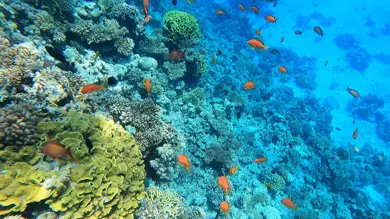
Shaab El Erg is a massive horseshoe-shaped reef rising from depths of over 600 metres. Its isolated location in the open Red Sea makes it a cleaning station and resting ground for a well-known pod of 80-100 bottlenose dolphins. The reef features a shallow lagoon (2-4 metres) inside the horseshoe and dramatic outer walls dropping vertically.
Marine Life:
The dolphin population is the primary attraction, though sightings are never guaranteed as these are wild animals following natural patterns. When present, dolphins typically rest in the shallow lagoon during morning hours. The reef itself supports Occasional sightings of grey reef sharks, barracuda, tuna, and large schools of jackfish. Eagle rays occasionally patrol the outer edges.
Coral Quality: ⭐⭐⭐⭐
The inner lagoon has limited coral due to dolphin activity and sandy bottom. The outer reef walls feature excellent hard coral formations and gorgonian fans below 15 metres.
Visibility: 25-35 metres (often the clearest water accessible from Hurghada)
Difficulty: Intermediate to advanced – open sea conditions, currents possible
Family Suitability: Moderate – depends on sea conditions and swimming confidence
Crowd Level: Moderate (distance limits visitor numbers)
Pros:
Best location for wild dolphin encounters
Exceptional water clarity
Less crowded than island destinations
Chance to see pelagic species (sharks, rays, tuna)
Dramatic reef walls for confident snorkellers
Cons:
Dolphin sightings not guaranteed (wild animals)
Longer travel time, rougher seas possible
Not suitable for weak swimmers or anxious beginners
Higher cost due to distance
Trips often cancelled in poor weather
Who Should Visit: Confident swimmers, wildlife enthusiasts, photographers seeking pelagic species, experienced snorkellers comfortable in open water.
Who Should Skip It: First-time snorkellers, those prone to seasickness, families with young children, travellers on tight schedules.
Approximate Travel Time: 60-90 minutes each way (speedboat recommended)
Dolphin House Snorkelling Expedition
.jpg)
3. Orange Bay (Gota Abu Ramada)
- Stunning beach scenery ideal for photography
- Extremely shallow, calm water perfect for children
- Most Orange Bay day trips also include time for swimming, relaxing on the beach, and snorkeling at nearby reef stops.
- Good for mixed groups (snorkellers and beach loungers)
- Minimal current, protected bay
- Coral quality inferior to dedicated reef sites
- Extremely crowded during peak season
- Limited marine life diversity
- Can feel commercialised
.jpg)
4. Mahmya Island (El Gouna)
- Exclusive beach club atmosphere with facilities
- Better coral preservation than public beaches
- Comfortable amenities (restaurant, loungers, shade)
- Controlled visitor numbers reduce crowding
- Good balance of snorkelling and relaxation
- Higher cost than public island destinations
- Beach club entry fee required
- Less "wild" experience
- Limited to operating hours
- Still requires boat transfer
.jpg)
5. Abu Ramada (The Aquarium)
- Highest fish density and biodiversity
- Exceptional coral quality and preservation
- Less crowded than island destinations
- Frequent shark and turtle sightings
- Shorter boat ride than Dolphin House
- No beach or shallow lagoon – reef only
- Currents can be challenging for beginners
- No facilities (everything onboard boat)
- Requires full snorkelling focus (not a beach day)
- Weather-dependent access
.jpg)
6. Sharm El Naga
Location: 45 km south of Hurghada
- Calmest water conditions year-round
- Excellent for beginners and anxious snorkellers
- High turtle sighting probability
- Minimal currents, protected bay
- Good for those prone to seasickness
- Less crowded than northern reefs
- Longest transfer from Hurghada (1+ hour each way)
- Marine life diversity lower than offshore reefs
- Visibility occasionally reduced
- Limited to bay environment (no open sea experience)
- Fewer tour operators serve this location
7. Careless Reef (Shaab Careless)
- Best location for shark encounters
- Exceptional visibility
- Dramatic reef walls and pinnacles
- Less crowded than tourist reefs
- Excellent for drift snorkelling
- Possibility of encountering larger pelagic species
- Not suitable for beginners or anxious snorkellers
- Currents require experience and fitness
- No shallow areas or beach
- Depth can be intimidating
- Weather and current dependent
- Requires strong swimming ability
.jpg)
Quick Comparison Table
| Location | Access Type | Best For | Snorkelling Quality |
| Giftun Island | Boat 45-60min Private Speedboat 15–20 min | All-round experience | ⭐⭐⭐⭐⭐ |
| Shaab El Erg | Boat 60-90min Private Speedboat 40 min | Dolphin encounters | ⭐⭐⭐⭐ |
| Orange Bay | Boat 50-60min Private Speedboat 15–20 min | Families & beaches | ⭐⭐⭐ |
| Mahmya Island | Boat 45-60min Private Speedboat 15–20 min | Comfort & facilities | ⭐⭐⭐⭐ |
| Abu Ramada | Boat 30-40min | Coral & fish density | ⭐⭐⭐⭐ |
| Sharm El Naga | Road transfer 40 min | Calm water beginners | ⭐⭐⭐⭐ |
| Careless Reef | Boat 40-50min | Sharks & pelagics | ⭐⭐⭐⭐ |
Understanding Hurghada's Marine Environments
Island Beaches vs. Coral Reefs
A common misconception among first-time visitors is that the best snorkelling happens directly off island beaches. In reality, these represent two distinct environments:
Island Beaches (Orange Bay, Paradise Island, Mahmya):
These locations prioritise shallow lagoons with sandy bottoms and gentle entry. They're ideal for families, non-swimmers, and those wanting to combine beach time with occasional snorkelling. Marine life generally dominated to shallow-water reef species. Coral quality may be affected by higher visitor pressure and proximity to shore.
Offshore Reefs (Abu Ramada, Careless Reef, Dolphin House):
These dedicated coral formations require boat access and full snorkelling commitment. They offer superior coral quality, higher biodiversity, and encounters with larger species. However, they lack beach facilities and demand stronger swimming ability.
Hybrid Locations (Giftun Island, Sharm El Naga):
These destinations balance both environments, offering beach access alongside quality reef snorkelling within swimming distance.
Why Reef Quality Varies
Not all coral reefs near Hurghada are equal. Several factors determine snorkelling quality:
Distance from Shore:
Reefs further from the mainland benefit from reduced sediment runoff and pollution. This explains why Abu Ramada and Careless Reef display superior coral health compared to near-shore locations.
Current Exposure:
Moderate currents deliver nutrients and prevent sediment accumulation, keeping corals healthy. However, excessive current limits accessibility for snorkellers. Shaab El Erg's isolated position creates ideal current conditions.
Visitor Management:
Protected areas with enforced regulations (Giftun National Park) show better preservation than unregulated sites. This is why Mahmya's controlled beach club model maintains better coral than freely accessible Orange Bay.
Depth Profile:
Reefs with gradual slopes (2-8 metres) offer better snorkelling than those dropping immediately to depth. Shallow coral formations allow extended bottom time without diving equipment.
Marine Life You Might Encounter
The Red Sea hosts over 1,200 fish species, with approximately 10% found nowhere else on Earth. While wildlife encounters are never guaranteed, understanding seasonal patterns improves your expectations.
Sea Turtles:
Green turtles (Chelonia mydas) and hawksbill turtles (Eretmochelys imbricata) inhabit Hurghada reefs year-round. Highest sighting probability at Sharm El Naga, Giftun Island seagrass beds, and Mahmya.
Blue-Spotted Stingrays:
These elegant rays rest on sandy patches during daylight hours. Common at Giftun Island, Orange Bay lagoon, and Sharm El Naga.
Napoleon Wrasse:
Protected under Egyptian law, these large, friendly fish often approach snorkellers. Best observed at Giftun Island and Abu Ramada.
Moray Eels:
Three species inhabit Hurghada reefs (white-eyed, gold-saddle, and giant moray). They hide in coral crevices during the day. Visible at all reef locations.
Seasonal Visitors
Dolphins:
Bottlenose dolphins frequent Shaab El Erg year-round but follow natural patterns. Morning visits (7-10 AM) offer highest sighting probability. Never chase or touch – these are wild animals protected by law.
Reef Sharks:
Grey reef sharks and white-tip reef sharks patrol outer reef walls year-round. Occasional sightings are reported around Abu Ramada, Careless Reef, and Shaab El Erg. Reef sharks are generally shy and are not considered a threat to snorkellers when left undisturbed.
Hammerhead Sharks:
Scalloped hammerheads appear seasonally (March-May) at deeper reefs like Careless Reef and Shaab El Erg. Sightings require luck and excellent conditions.
Manta Rays:
Occasional visitors to cleaning stations at Careless Reef and Shaab El Erg. More common during plankton blooms (typically spring).
What You Won't See
Great White Sharks:
Despite sensational media coverage, great white Sharks are not considered part of the Red Sea's coral reef ecosystem.
Jellyfish:
While present in open water, jellyfish rarely enter protected reef areas. Seasonal blooms (typically late summer) can occur but are uncommon.Poisonous Species:
The Red Sea has few genuinely dangerous species. Stonefish and lionfish exist but are cryptic and avoid human contact. Simply avoid touching any marine life.FAQ
Where is the absolute best snorkelling in Hurghada?
For overall quality, Abu Ramada (The Aquarium) offers the best combination of coral health, fish density, and accessibility. However, "best" depends on your priorities: families should choose Giftun Island or Sharm El Naga, while experienced snorkellers seeking pelagic encounters should prioritise Careless Reef or Shaab El Erg.
Which reef has the healthiest coral?
Abu Ramada and Careless Reef consistently display the highest live coral coverage (70-85%) due to their offshore location, moderate currents, and lower visitor numbers. Both benefit from minimal sediment exposure and active conservation.
Can complete beginners snorkel at these locations?
Yes, but location selection matters. Sharm El Naga, Orange Bay, and Giftun Island's western lagoons offer calm, shallow water (1-3 metres) ideal for first-timers. Avoid Careless Reef and Shaab El Erg until you've built confidence and swimming ability.
Which island has the clearest water?
Shaab El Erg (Dolphin House) typically offers the best visibility (25-35 metres) due to its isolated open-sea position far from mainland sediment. Careless Reef ranks second for clarity.
Orange Bay vs Mahmya Island – which is better?
Orange Bay excels for dramatic beach scenery and shallow lagoons perfect for children. Mahmya offers superior coral quality, better facilities, and controlled visitor numbers but at a higher price. Choose Orange Bay for beach photography and young children; choose Mahmya for better snorkelling and comfort.
What's the best location for families with children?
Sharm El Naga provides the safest conditions with calm, protected water and high turtle sighting probability. Giftun Island and Mahmya also work well for families. Avoid offshore reefs like Careless Reef and Dolphin House with young Childern.
Where can I see sea turtles?
Sharm El Naga offers the highest turtle sighting probability (70-80%) due to extensive seagrass beds. Giftun Island and Mahmya also report regular turtle encounters. Visit early morning when turtles actively feed.
Where are dolphins usually found?
Shaab El Erg (Dolphin House) hosts a resident pod of 100-150 bottlenose dolphins. However, these are wild animals – sightings average 60-70% and are never guaranteed. Morning departures (7-8 AM) maximise probability. Never chase or touch dolphins; Egyptian law imposes heavy fines.
What's the difference between Giftun Island and Orange Bay?
Both are part of the Giftun archipelago but serve different purposes. Giftun Island (Giftun Kebir) is a protected national park focused on coral reef snorkelling with multiple dive sites. Orange Bay is a specific beach destination on the archipelago's southern tip, prioritising shallow lagoons and beach time over coral quality.
Is it worth visiting multiple reefs during one trip?
Yes, if you have 3+ days in Hurghada. Each reef offers distinct characteristics: combine Giftun Island (classic experience) with Abu Ramada (coral quality) and Shaab El Erg (pelagic wildlife) for comprehensive Red Sea exposure. Avoid visiting similar reef types consecutively.
Which location is best for underwater photography?
Abu Ramada provides the best combination of coral diversity, fish density, and light penetration for photography. Giftun Island offers excellent macro opportunities with resident Napoleon wrasse. Bring a red filter for colour correction below 5 metres.
Do I need to be a strong swimmer?
For beginner-friendly locations (Sharm El Naga, Orange Bay, Giftun Island lagoons), basic swimming ability suffices. The Red Sea's high salinity provides natural buoyancy. However, offshore reefs (Careless Reef, Shaab El Erg) require confident swimming and comfort in open water with currents.
Ready to Explore Hurghada's Reefs?
Each of these seven locations offers a distinct window into the Red Sea's underwater world. Your choice should align with your swimming ability, interests, and time availability.
For First-Time Visitors: Start with Giftun Island for the classic Red Sea experience.
For Families: Prioritise Sharm El Naga or Orange Bay for calm, shallow conditions.
For Serious Snorkellers: Don't miss Abu Ramada and Careless Reef for exceptional coral and pelagic encounters.
For Wildlife Enthusiasts: Shaab El Erg offers the best probability of dolphin and shark sightings.
Many of these locations can be visited through professionally guided boat tours or private speedboat experiences, with equipment, meals, and safety briefings typically included depending on the itinerary. When booking, prioritise operators committed to responsible tourism practices and reef conservation.
The Red Sea's coral reefs are among the planet's most resilient, but they're not invincible. By choosing responsible operators, following snorkelling etiquette, and managing your expectations around wildlife encounters, you contribute to preserving these ecosystems for future generations.


_lg.webp)
_lg.webp)

_lg.webp)
_lg.webp)
_lg.webp)